


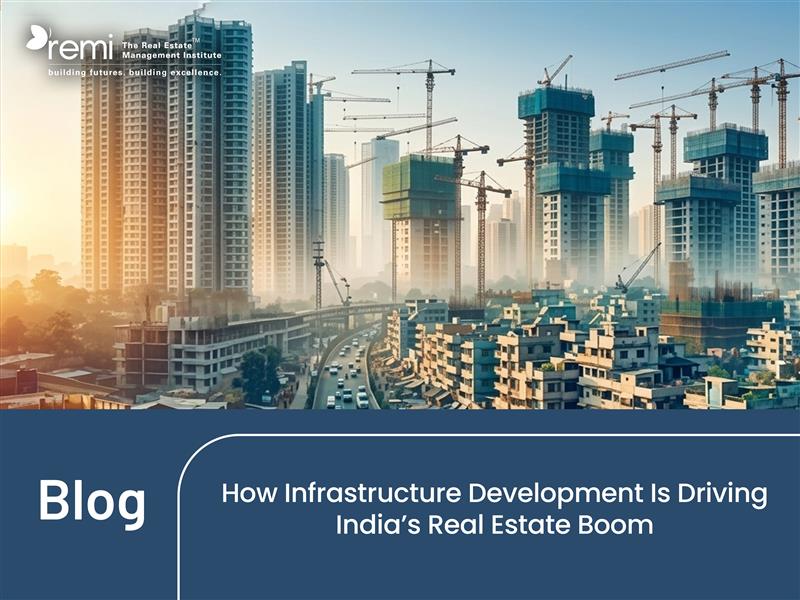
Infrastructure development has become one of the biggest drivers of real estate growth in India. Investments in highways, metro rail networks, airports, industrial corridors, and logistics hubs are transforming how cities expand and where property demand rises. As connectivity improves, new residential, commercial, and industrial real estate markets are emerging across the country.
Infrastructure not only improves mobility but also shapes land use patterns and investment trends. Areas that were once considered peripheral are now turning into high-growth real estate corridors due to better transportation networks and economic activity.
The Link Between Infrastructure and Real Estate
Infrastructure and real estate share a strong and direct relationship. When connectivity improves through expressways, metro systems, airports, and freight corridors, surrounding regions become more attractive for both homebuyers and businesses.
Improved infrastructure leads to:
- Higher residential demand in well-connected suburbs
- Growth of commercial hubs and business districts
- Expansion of logistics parks and warehousing
- Development of integrated townships and mixed-use projects
This connectivity reduces travel time and improves urban accessibility, encouraging people and companies to move beyond traditional city centers.
National Infrastructure Push Transforming Real Estate
Over the past decade, India has significantly increased infrastructure spending through major initiatives such as Bharatmala, Sagarmala, Dedicated Freight Corridors, and metro rail expansion across major cities.
These projects are reshaping the real estate landscape by encouraging the development of Tier 2 and Tier 3 cities and boosting demand for logistics and warehousing spaces.
- Expansion of Tier 2 and Tier 3 cities
- Rising demand for logistics and warehousing infrastructure
- Growth of transit-oriented development near metro corridors
- Increasing demand for affordable housing along highways and metro lines
Maharashtra: A Hub for Infrastructure-Led Real Estate Growth
Maharashtra has emerged as one of the strongest examples of infrastructure-driven real estate development in India. Cities like Mumbai, Pune, and Nagpur are witnessing major infrastructure upgrades including metro networks, expressways, coastal roads, and new airports.
Major projects such as the Mumbai Metro expansion, Mumbai Trans Harbour Link, and Samruddhi Mahamarg Expressway have opened up new development zones and boosted land values in surrounding areas.
These infrastructure developments are creating new residential hubs, logistics parks, and commercial districts across the state.
Infrastructure’s Impact on Property Value
Infrastructure acts as a powerful multiplier for real estate valuation. Locations with strong connectivity often experience faster property appreciation and higher investment demand.
Areas located near key infrastructure developments tend to attract more developers, investors, and homebuyers.
- Metro rail connectivity increases residential demand
- Expressways improve regional accessibility
- Airports boost commercial and hospitality development
- Industrial corridors encourage logistics and warehousing growth
In Maharashtra, improved connectivity between Mumbai, Pune, and Nashik has strengthened industrial and warehousing real estate while supporting residential expansion in emerging micro-markets.
The Future of Infrastructure-Led Real Estate Growth
As India aims to become a developed economy, infrastructure will continue to shape the future of real estate. The coming years are expected to witness rapid growth in satellite cities, logistics hubs, smart townships, and integrated urban developments.
- Expansion of satellite cities around major metros
- Growth of logistics and warehousing hubs
- Rise of smart townships and integrated developments
- Increase in commercial real estate investments
Conclusion
Infrastructure is not just a support system for real estate — it is the sector’s primary growth engine. Improved connectivity unlocks new development zones, increases property values, and attracts investment.
As India continues to build world-class infrastructure, the real estate sector will remain one of the biggest beneficiaries of this transformation.